Hidden engine of suburban growth
Florida’s population surge is visible in rooftops, shopping centers and schools. But beneath the surface lies a lesser-known force powering many of Florida’s largest residential communities: special-purpose authorities known as community development districts, or CDDs.
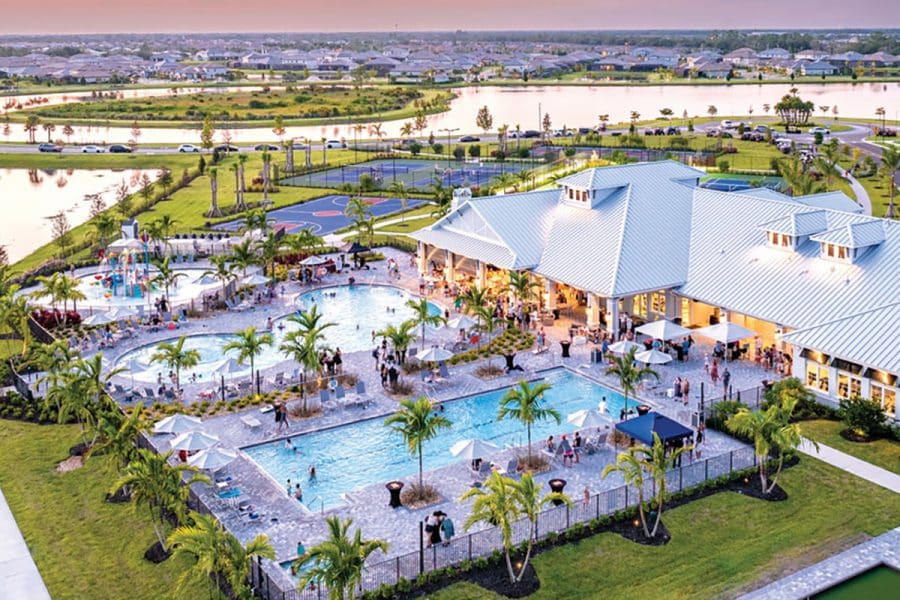
Photo above: For more than a century, the Uihlein family, one of the original owners of the Schlitz Brewery, has owned Schroeder-Manatee Ranch, where it operated cattle, citrus and tree farms, as well as shell and road-base mines. In 1995, large-scale development of Lakewood Ranch began with the first homes. Credit: Lakewood Ranch
CDDs, and their larger cousins, stewardship districts, serve as the growth engine of scores of Florida’s most successful master-planned communities. These are quasi-governmental entities that have the authority to issue tax-exempt municipal bonds to pay for basic infrastructure people take for granted, such as roads, sidewalks, utilities, streetlights and parks. The bonds are repaid through assessments on the tax bills of property owners who move in — a tidy way for “growth to pay for growth,” according to Kenza Van Assenderp, one of the law’s original architects.
But the story of CDDs is far from straightforward. Despite their government imprimatur, CDDs are not immune from roller-coaster real estate cycles. Still fresh in the minds of CDD experts is the housing boom of the early 2000s when the number of CDDs surged, only to collapse during the Great Recession as scores of districts defaulted, and developers abandoned projects. Today, as the Florida real estate market has rebounded stronger than ever, so have the fortunes of CDDs — though not without lingering skepticism. Some developers rely on them heavily; others avoid them. Some city and county officials see them as essential, while others question their cost on residents and accountability. The negative publicity that these special districts occasionally generate in the news media irks developers, who complain about people’s lack of knowledge of CDDs and a near reflex response among some who fear CDDs may portend unbridled growth.
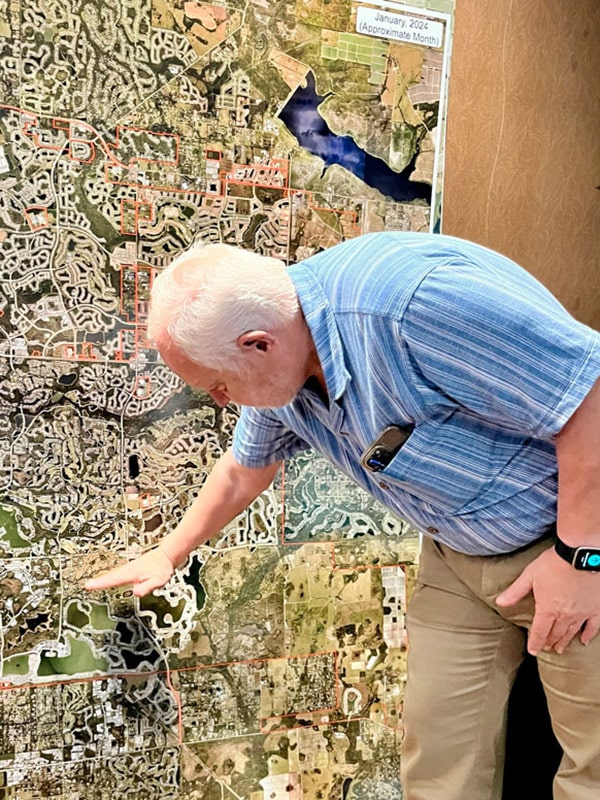
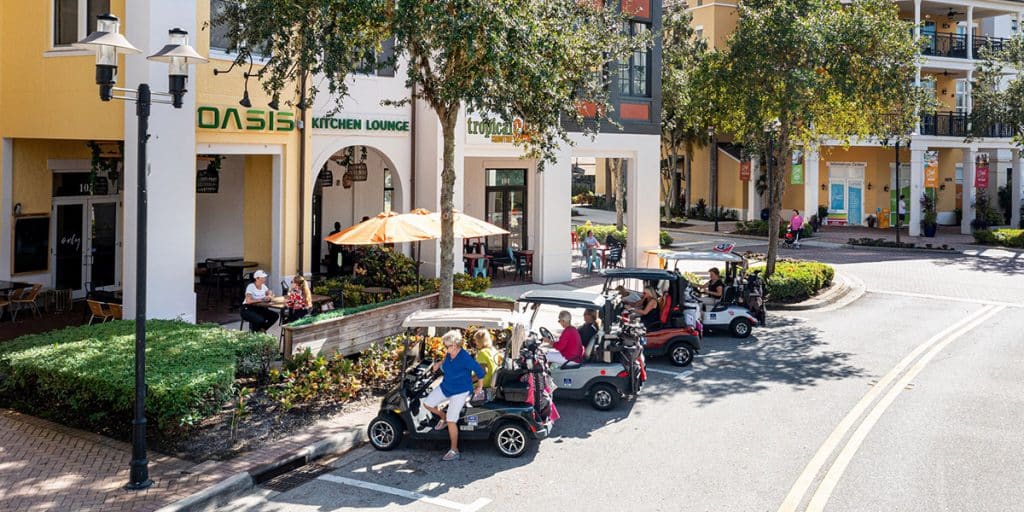
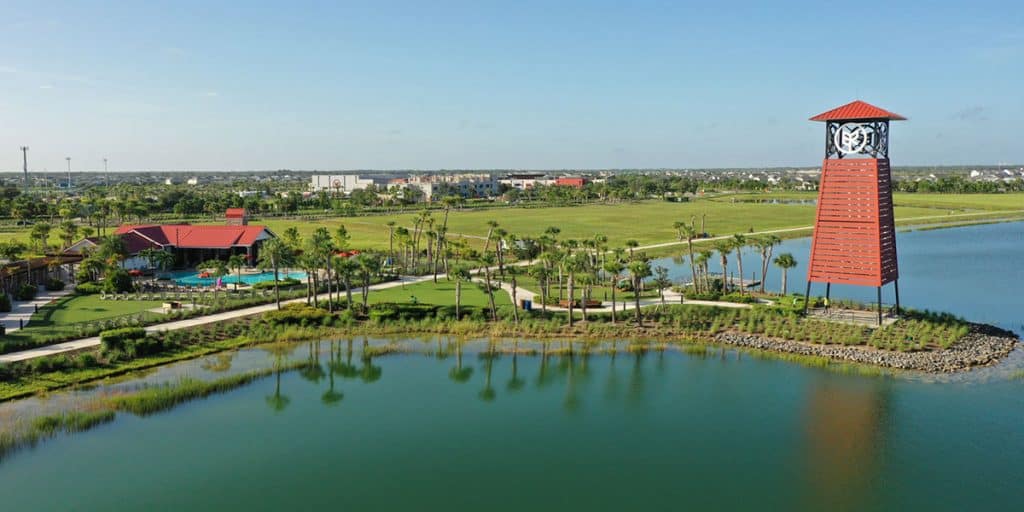
To paint a full picture of these special districts, I read news and academic reports; scoured data; and interviewed nearly 20 sources with varying perspectives, including government officials, residents, managers, investors and developers. In September, I visited the sprawling Lakewood Ranch in Southwest Florida to see how the model works up-close. Spanning 55 square miles across Manatee and Sarasota counties — larger than Miami or San Francisco — Lakewood Ranch has grown from a scrubby expanse of cattle and timber 30 years ago into one of America’s largest master-planned communities. Drive through the unincorporated community and you’ll find all the hallmarks of a well-kempt city — dozens of neighborhoods, a town hall, lavish landscaping, shopping centers, seven Publix grocery stores, schools, parks, lakes, a medical center, community colleges — and 78,000 residents. Undergirding the whole thing are five CDDs and a stewardship district. “You can’t build something this size without them,” said Rex Jensen, longtime CEO of Schroeder-Manatee Ranch, the company behind Lakewood Ranch.
Nuts and bolts
The origin of CDD-financed communities like Lakewood Ranch goes back to the 1970s as Florida’s rapid population growth outpaced the ability of counties and cities to provide basic infrastructure. Developers were desperate for roads, utilities and schools for new residential neighborhoods, but local governments lacked the funding and flexibility to keep up. Officials were “in a painful squeeze between obstructing local growth and stirring trouble with voters over high taxes,” wrote Wayne Archer and David Ling, authors of the university textbook, “Real Estate Principles.”
Florida has long relied on special districts to provide narrow public services like drainage, water management, fire rescue and even mosquito control. But the state needed a new model for development, one that recognized that successful community building required integrated solutions rather than piecemeal infrastructure. In 1980, the Legislature passed the Uniform Community Development District Act to allow developers to provide a suite of city-like infrastructure and services. In so doing the lawmakers created a solution to Florida’s development dilemma, “as if by magic,” according to Archer and Ling.
Explaining the details, Van Assenderp said CDDs are more efficient than counties and cities, yet more accountable than solely relying on developers. CDDs are subject to all of Florida’s Sunshine laws related to open meetings, audits, competitive bidding and public records requirements. They also must abide by local regulations on zoning, land use, building codes and environmental law. Governance of a district begins with a developer-appointed board of supervisors and switches to popular elections when a minimum number of qualified electors live in the district. The bonds are repaid by assessments levied on people moving in — a property owner’s contribution to a subdivision’s facilities.
In effect, CDDs are borrowing machines – ready-made to sell tax exempt municipal bonds secured by the land in a new community. This is a new path for developers who have traditionally relied on adjacent governments to extend services, and secured financing from banks, private investors or carried infrastructure costs themselves — until property was built out and sold. Using a CDD, developers pitch projects on the bond market, drawing previously untapped funding from institutional and wealthy investors wanting to earn interest exempt from federal income taxes. Investors viewed this long-term debt as secure because they hold first liens on properties, taking priority over a bank’s mortgage. Just like with property taxes, if an owner doesn’t pay CDD assessments she could lose the property through foreclosure or public auction, even if it’s homesteaded, said Jonathan Johnson, a Tallahassee attorney who specializes in CDD law. Such special districts aren’t solely a Florida creation as they have proliferated in states like Texas, Colorado and California where they are known as municipal utility, metropolitan or community service districts. But no other state has relied on CDDs more than Florida in recent years.
Bust and resilience
Florida’s CDD model took several years to gain traction, but as the state’s housing market soared in the early 2000s, so did the use of CDDs. By 2007, the state had 471 districts. But the magic faded when housing prices collapsed during the Great Financial Crisis. Faced with nose-diving housing prices, many districts found themselves without enough lot owners to pay debt service. Districts defaulted by the dozens, and 72 CDDs dissolved between 2008 and 2015, according to state records. By 2011, 38% of districts with outstanding bonds had defaulted or were classified as financially distressed, according to research from the Leroy Collins Institute at Florida State University, which relied on data compiled by Richard Lehmann, a municipal bond investor.
In an interview, Lehmann said he began publishing a newsletter to track what became derisively known as Florida’s “dirt bonds” because bondholders who had expected steady tax-like payments suddenly faced silence as they tried to find out the status of a development they were funding. “There was no revenue coming in because the projects had stopped,” he said. Land lay fallow, roads unfinished, drainage ponds half-dug.
Craig Wrathell, president of Wrathell, Hunt & Associates, one of the largest CDD management firms, said the recession exposed the vulnerability of newly formed districts. “The CDDs that were just starting construction leading into the Great Recession understandably floundered due to the lack of lot and home sales necessary to generate revenues,” he said. But the defaults were largely a problem of timing and overextension — not of the CDD model itself, according to veterans of the CDD market. In most cases, districts removed nonperforming developers through foreclosure and brought in successors to move projects forward, said Grady Miars, president of GreenPointe Development, who has helped establish numerous CDDs for master-planned communities. “The land was still there, the approvals (for zoning and other entitlements) were still there. Most of the communities survived, and people still wanted to live in them.”
Since then, the tide has turned again—especially following the COVID-19 pandemic as Florida’s population surged. Institutional investors returned and tens of billions of dollars have flowed into tax-exempt CDD bonds to finance new developments. As of Aug. 20, 2025, Florida was home to 1,088 development-style special districts—1,067 CDDs and 21 stewardship districts—up more than 50% since 2020 (Figure 1).
Sources: Florida Department of Commerce, Special District Accountability Program; report from staff of Legislative Audit Committee; UF Bergstrom Real Estate Center
Another indicator of CDDs’ resilience: FMSbonds, a leading underwriter of CDD bonds based in Boca Rotan, has financed 478 Florida CDD bond issues totaling $4.96 billion since 2020, according to the company’s published transaction list. This includes a record $1.3 billion and 119 deals in 2024. “Since 2011, defaults have been negligible,” said Jon Kessler, director of investment banking. He described the evolution of CDD financing from the early experimental years through the current mature market. During the financial crisis, “bad actors and undercapitalized projects” created significant problems. Since then, he and others said investors and bankers have developed more expertise in evaluating CDD creditworthiness based on factors like development absorption rates, infrastructure quality and developer financial strength.
CDDs are becoming so widespread in Florida that it may be difficult for buyers in certain high-growth regions to avoid them. For instance, reporters at Suncoast Searchlight found that nearly three-fifths of new single-family homes built in 2023 in Sarasota and Manatee counties were in special districts. The news outlet reviewed hundreds of thousands of tax collector assessments and property appraiser records.
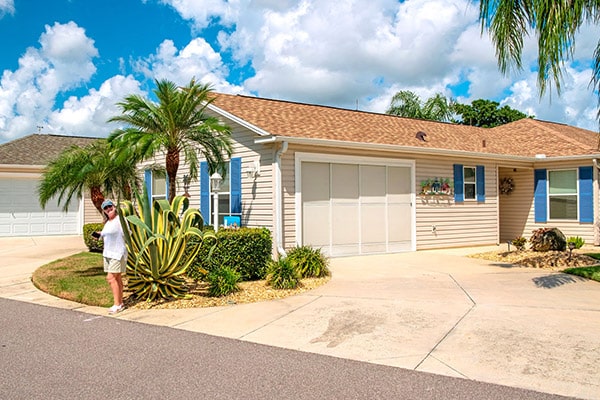
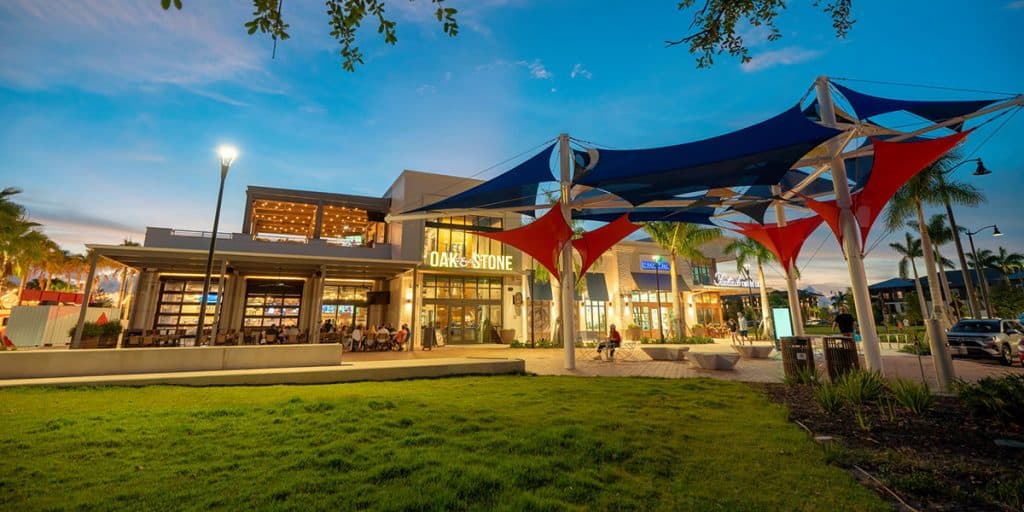
We were unable to expand this work statewide. U.S. Census Bureau data shows that 81% of new homes sold in 2023 were in a community with a homeowners’ association (HOA), but the agency doesn’t track similar data for CDDs. Florida county property appraisers don’t customarily code properties in a CDD, and a spokesperson at the Florida Department of Revenue said the agency does not receive CDD data from local governments. But it’s safe to say that hundreds of thousands of Florida residents live in communities with CDDs or stewardship districts, and the number rises every year. Consider this: Florida is home to 15 of the nation’s top 50 selling master-planned communities as of mid-2025, according to Robert Charles Lesser & Co., or RCLCO. All but three are in CDDs or stewardship districts. This includes No. 1 The Villages — the sprawling 55-and-over community in Central Florida built with 16 separate CDDs — and No. 2 Lakewood Ranch. (The top 10 Florida master-planned communities are shown in Table 1.) Neither community is yet built out.
Table 1 – Top 10 Florida master-planned communities
Ranked by new home sales through mid-2025
| Development, location | Developer(s) | *CDD(s) | Sales |
|---|---|---|---|
| 1. The Villages; Sumter, Marion, Lake counties | The Villages | 1,604 | |
| 2. Lakewood Ranch; Sarasota, Manatee counties | Schroeder-Manatee Ranch | 1,185 | |
| 3. Wellen Park, Venice | Mattamy Homes | 531 | |
| 4. Babcock Ranch; Charlotte,Lee counties | Kitson and Partners | 515 | |
| 5. Silverleaf, St. Augustine | Hutson Cos. | 504 | |
| 6. Watersound (incl. Latitude Margaritaville), Bay County | Minto Communities, St. Joe Co. | 450 | |
| 7. Ave Maria, Ave Maria | Barron Collier Cos. | 318 | |
| 8. Rivertown, Jacksonville | Mattamy Homes | 290 | |
| 9. Viera, Melbourne | The Viera Co. | 290 | |
| 10. Angeline, Land O’Lakes | Metro Development Group | 277 |
Sources: RCLCO, UF Bergstrom Real Estate Center
Research and criticism
Despite their four-decade existence and widespread use, scholarly literature on CDDs is skimpy. Among the published peer-reviewed academic papers is a 2021 study that analyzed the borrowing, spending and governance of CDDs in Florida1. One major takeaway is “CDDs augment — rather than duplicate — the roles of traditional general-purpose local governments by providing new development infrastructure.” This matches the intention of the law. On the other hand, CDDs “likely create incentives for developers to oversupply infrastructure to maximize profits.” They point to luxury amenities such as fancy clubs and recreational facilities, high-end golf courses, and expensive landscaping found in many CDD-financed communities.
This and several other reports cite potential accountability problems, since developers rather than residents control CDDs during their initial stage. A CDD is governed by a five-member board of supervisors selected by the developer and landowners. After six years, or 10 years if a district reaches a certain size threshold, voting switches to popular election when a minimum number of qualified electors live in the district. This means that despite being a governmental entity the decision-making powers are concentrated in the hands of the developers in the formative years, when most major infrastructure development and financial decisions are made, and residents who buy in later must live with those decisions, according to the study. The researchers argued CDDs are in effect private governments controlled by developers. With respect to decision-making, one can counter that a CDD is no different than a privately funded development in that the developer always determines a community’s infrastructure and amenities.
Another criticism is that because CDDs are not well known, buyers may not be aware their property is in one. Anecdotal news stories highlight buyers surprised to find their property tax bills include not only ad valorem taxes but non-ad valorem CDD special assessments. The assessments range from roughly $1,600 to $6,000 or more a year, based on a review of property tax bills and conversations with real estate agents. The payments are broken into two components: first, a property owner’s portion to satisfy the bond debt — which does not change and typically lasts 30 years; plus, a charge for operations and maintenance, which the board of supervisors may vote to change to keep up with a community’s ongoing expenses. These charges are separate from HOA dues residents are far more familiar with, which pay for services like enforcing deed restrictions and operating swimming pools. Developers loath this criticism of CDDs as unfair because by law real estate agents must declare if a property is in a CDD at the time of purchase, and closing documents contain bold statutory language about the assessments, which appear as a line item on property tax bills.
1) Deslatte, A., Scott, T. A., & Carter, D. P. (2021). Probing the Fiscal Implications of Multipurpose Development Districts: An Institutional Analysis of Florida Community Development Districts. State and Local Government Review, 53(1), 43-61.
Tales of three cities
The tension between CDDs and traditional local government manifests most clearly in local governmental approval processes, where elected officials must balance development benefits against concerns about accountability, equity and fiscal impact.
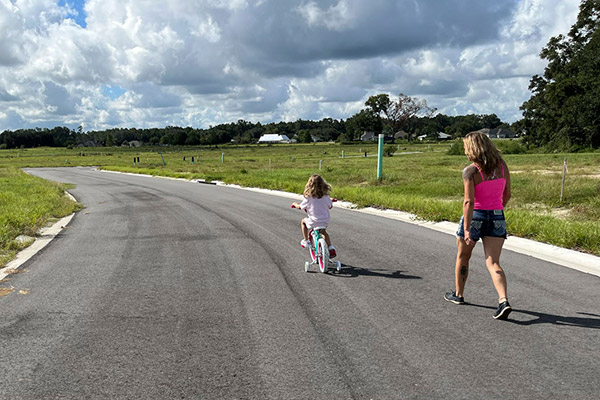
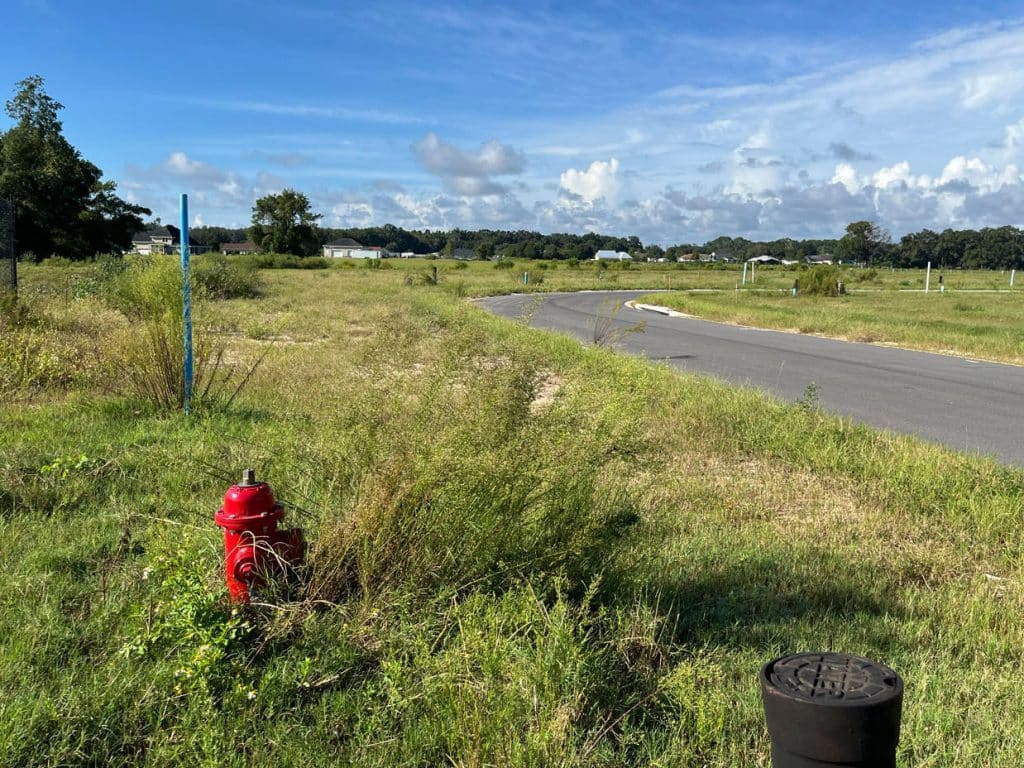
For example, in High Springs, northwest of Gainesville, commissioners recently rejected what would have been the town’s first CDD: Bridlewood, a planned 680-acre project. It already has zoning and land-use approvals for 2,000 homes and apartments, as well as amenities like parks, trails, a clubhouse and swimming pool. But as it stands now Bridlewood can’t be financed and operated by a CDD. City commissioner Katherine Weitz, who voted against the CDD, admitted she hadn’t known what one was before the Bridlewood petition. After she studied it, “I grew concerned about the extra stack of costs buyers would face — mortgage, property taxes, a bond payment, a CDD maintenance fee and HOA dues on top of it all,” she said. To her, that was too much to ask of young families. She also worried the proposal “felt like a luxury-style development that didn’t fit High Springs’ ethos” and that its density clashed with nearby homes that sit on one-acre lots. Though the development may proceed because it has all the necessary entitlements, Weitz considers it a win that at least new residents won’t be saddled with CDD assessments. To see Bridlewood myself, I followed GPS coordinates down a country road about a mile from High Springs’ quaint downtown to find its scaffolding already in place: streets, curbs, gutters, sewers and underground power lines marked by small flags on dozens of empty lots. The virtual ghost community marks the first phase of Bridlewood, which has so far been self-financed, said Naples developer Michael Lamelza, age 86. He complained the city’s rejection was short-sighted because, after all, a CDD would provide funds to guarantee that the streets, drainage and other systems will be kept to a high standard long after he is gone. Despite the setback, Lamelza made clear he would continue to develop Bridlewood, albeit more slowly.
Just 12 miles south it’s a different story in Newberry, where officials recently approved two CDDs that will provide the foundation for thousands of new homes. City Manager Jordan Marlowe said city officials spent nearly three years studying CDDs before being convinced the model would ensure “what is proposed is what is built.” The CDDs will allow the new neighborhoods “to add the enhancements they want — without taxing the rest of the city. We’re not Orlando or Jacksonville with giant bond capacity. If we want to keep the small-town feel while adding housing, we need tools that scale with the growth. This was the way to do it.”
CDDs may be new to Newberry, but they are old hat in high-growth cities like Port St. Lucie, which has 30 districts in its city limits. Mayor Shannon Martin said she gets questions from residents all the time, “usually about the assessments. People look at their tax bill and want to know why they’re paying this extra line item.” Martin said her answer is straightforward: “It’s how you got your park, your pool, your sidewalks, your trails. Without that assessment, those things wouldn’t be there.” Martin added that while CDDs are confusing for residents, they remain one of the few ways cities like hers can manage rapid growth without overburdening taxpayers. “When you have thousands of homes coming in, the infrastructure has to come with it,” she said. “Local governments don’t have that kind of money sitting around. This tool makes growth possible.”
Alternatives to CDDs
Not every major developer relies on CDDs. Florida operators like Hutson Cos. and Minto Communities market their developments as not having CDD assessments. Minto develops projects like Latitude Margaritaville, sprawling 55-and-up communities tied to the late Jimmy Buffett’s brand. Bill Bullock, president of Minto Communities USA, said the company relies on traditional financing methods to fund infrastructure, folding the costs into the price of the home. “The value is already baked into the house,” he explained. The absence of CDD assessments “is part of our marketing. We can look people in the eye and say: ‘you’ll never get a CDD bill from us.’” Bullock said the marketing is powerful. “People hear ‘no CDD fee’ and that resonates,” he said. “But at the end of the day, whether it’s paid through a CDD or through the home price, the cost of infrastructure has to be covered.”
While some developers play up the absence of a CDD, others have leaned into the model — and gone even bigger. Twenty-one of Florida’s biggest master-planned developments are known as stewardship districts, a new frontier in special district governance. These are so large and complex—up to tens of thousands of acres, sometimes spanning multiple counties—that by law they are established not by local governments but by the state, usually through a special act. These include not only Lakewood Ranch but Babcock Ranch in Charlotte and Lee counties and Ave Maria in Collier County. In June, Gov. Ron DeSantis signed bills to create two more — Corkscrew Grove in eastern Collier County for Alico, a longtime citrus producer that plans 9,000 homes, and Duke Farm in rural Lee County, where Florida homebuilder Neal Communities plans 1,099 homes.
Even more significantly, lawmakers also approved the expansion of Sunbridge Stewardship District — one of the most closely watched developments in Florida. The project is on land owned by the Church of Jesus Christ of Latter-day Saints, which 75 years ago assembled nearly 300,000 acres across Osceola, Orange and Brevard counties for its Deseret Ranches of Florida operations. To develop the chunk known as Sunbridge, the Mormon church uses a taxable investment affiliate, Suburban Land Reserve, and teamed up with master developer Tavistock Development Co. Already Florida’s 15th best-selling master-planned community, Sunbridge has entitlements to develop 37,690 residential units, 11.8 million square feet of commercial space and 5,490 hotel rooms in Osceola County and the city of Orlando. Establishing a stewardship structure allows the partners to better coordinate all the infrastructure, environmental management and phasing needed at this scale, said Richard Levey, a former Orlando city manager who serves as a Tavistock adviser and chair of the Sunbridge Stewardship District’s board. “The stewardship districts are very, very long term and much more influenced and controlled by the developer over the long haul than are community development districts,” he said. “The buildout is market-dependent and could extend into the 2060s or 2070s.”
Lakewood Ranch also adopted the stewardship district model in 2005 when the company realized it couldn’t continue to create a hodgepodge of CDDs as it phased development across 33,000 acres, said Jensen, a real estate lawyer who grew up on a potato farm. Lakewood Ranch has gone on to raise nearly $1 billion via 46 bonds to fund its extensive network of roads, utilities, lakes, golf courses and other amenities. On the day I visited, the district completed a $149 million bond issue to finance the last large section of the ranch, 5,000 more residences across 4,000 acres.
Given the size and the scope of districts, why don’t they incorporate as cities? Two South Florida communities did just that: In 1996, residents of what is now known as Weston voted to incorporate as a city after being governed by the Indian Trace CDD, and 10 years later Westlake became Florida’s newest city after a vote by members of the Seminole Improvement District. Years earlier, the same sentiment bubbled up in Lakewood Ranch, where some claimed incorporating would give residents more control of policy decisions, operate its own police force and increase revenue. But an anti-city group argued incorporation would create more bureaucracy and lead to increased taxes and fees if revenue projections did not pan out. The effort died after 57% of qualified voters in a straw poll elected to keep things as they are. Jensen told a reporter afterward: “It seems as though the sentiment is quite clear in that few want more government and fewer still trust it to do the right thing.”
Jensen’s final thoughts on the CDD model reflect both pride in what has been accomplished at Lakewood Ranch and recognition they aren’t right for every place. The long-term assessment obligations, developer control during key development phases and eventual resident responsibility for municipal-scale operations are big considerations that potential buyers must understand and accept. “CDDs work exceptionally well for large-scale master-planned communities with extensive infrastructure and amenity requirements,” he said, “but they’re not necessary or appropriate for every type of development.”
Charles Boisseau is editor of Due Diligence.
Related stories



For the media
Looking for an expert or have an inquiry?
Submit your news
Contact us
Follow us on social
@ufwarrington | #BusinessGators