
Training and development
Principles and practices that support good utility policy
Learn to support effective utility policy, regulation, management and leadership with courses, workshops and training designed by the Public Utility Research Center.
We help government officials and industry professionals develop efficient utility infrastructure to better meet the needs of their customers.
PURC’s extensive network of utility and regulatory experts around the world work with the Warrington College of Business to connect theory and practice in ways that extend understanding of energy, water, and telecommunications sectors. We deliver utility training programs in Florida, the nation and around the world.
PURC International Training Program on Utility Regulation and Strategy
The international training program is an intensive course specifically tailored to the professional requirements of utility regulators and regulatory staff. The course is designed to enhance the economic, technical, and policy skills required for implementing policies and managing sustainable regulatory systems for infrastructure sectors. Each program encompasses more than 35 sessions that include case studies, practical exercises and panel discussions with leading experts and international faculty.

You will learn:
- Why countries are reforming their utility sectors and the basic approaches
- How competition affects tariff rebalancing, cross-subsidization, and funding of social obligations
- How to conduct price reviews
- How to determine the cost of capital and assess the projects, particularly in countries with scarce or unreliable cost information
- What incentive rules promote competition, efficiency, and innovation
- What the effective regulatory strategies are for monitoring performance and enforcing compliance
- Where competitive forces can be introduced or strengthened
- What the key considerations are in rate design
- What the key considerations are for the establishment and functioning of regulatory institutions
- How the regulatory process can promote legitimacy and credibility of regulatory decisions
Course calendar
Week 1
| Monday | Tuesday | Wednesday | Thursday | Friday |
|---|---|---|---|---|
| Session 1 Welcome and Overview of Regulation | Session 6 (sector breakout) Utilities I. Market Reform: Sectoral Experiences in Reform ICT I. Market Reform: Competition and Convergence | Session 12 III. Financial Techniques: Uniform System of Accounts | Session 17 (sector breakout) Utilities ICT III. Financial Techniques: Case Study in Analyzing Financial Statements: | Session 22 (sector breakout) Utilities IV. Incentive Regulation: Risk Mitigation Strategies ICT I. Market Reform: Your ICT Strategy |
| Session 2 I. Market Reform: Cases in Building Regulation | Session 7 (sector breakout) I. Market Reform Energy Establishing Regulatory Policies ICT Aligning Regulation with Market Competition Water Operational Issues in Water and Wastewater | Session 13 IV. Incentive Regulation: Methods of Incentive Regulation: Establishing Revenue Needs | Session 18 IV. Incentive Regulation: Price Cap Regulation | Session 23 IV. Incentive Regulation: Benchmarking |
| Session 3 + Lunch I. Market Reform: Case Study on Choosing Regulatory Priorities | Session 8 (sector breakout) I. Market Reform Energy Issues in Sectoral Reforms Water Impacts of Regulatory Practices ICT Digital Transformation | Session 14 III. Financial Techniques: Elements of Finance | Session 19 IV. Incentive Regulation: Performance Based Regulation | Session 24 VII. Regulatory Process: Independent Management Issues in Regulation |
| Session 4 I. Market Reform: Effective Independence | Session 9 (sector breakout) Utilities I. Market Reform: Practices in Sectoral Reform ICT II. Competition: AI and Its Industry Impacts | Session 15 V. Non-Price Issues: The Challenge of Artificial Intelligence | Session 20 (sector breakout) Utilities IV. Incentive Regulation: Sector Cases Breakouts: ICT I. Market Reform: Balcony Perspectives in ICT Strategy | Session 25 VII. Regulatory Process: Case Study in Managing the Political Environment |
| Session 5 I. Market Reform: Legal Framework for Regulation | Session 10 (sector breakout) Utilities II. Competition: Economics of Market Structure & Market Reform ICT Cases in ICT Strategy: Future Success | Session 16 IV. Incentive Regulation: Cost to Serve Problem | Session 21 IV. Incentive Regulation: Case Study in the Design and Implementation of Hybrid Systems | |
| Welcome Reception | Session 11 (sector breakout) Utilities II. Competition: Economics of Market Structure & Market Reform – Cont. ICT V. Non-Price Issues: Emerging Issues | Campus Tour |
Week 2
| Monday | Tuesday | Wednesday |
|---|---|---|
| Session 26 VI. Rate Structure: Pricing Objectives and Options in Network Industries | Energy Tour of Cogeneration Plant Water Tour of Water Reclamation Facility ICT Tour of Data Center | Session 34 VII. Regulatory Process: Thinking Strategically |
| Session 27 (sector breakout) Utilities V. Non-Price Issues: Techniques for Improving Utility Efficiency ICT I. Market Reform: Convergence | Session 30 (sector breakout) Utilities VI. Rate Structure: Sector Issues in Rate Design – Cases in Rate Setting ICT I. Market Reform: Impacts of Starlink | Session 35 + Lunch VII. Regulatory Process: Negotiation Exercise |
| Session 28 (sector breakout) Utilities VI. Rate Design: Case Study in How to Conduct Price Review ICT I. Market Reform: Convergence Cont. | Session 31 (sector breakout) Utilities VI. Rate Structure: Sector Issues in Rate Design – Cases in Ratemaking ICT II. Competition: Radio Spectrum Management | Session 36 VII. Regulatory Process: Key Lessons and Distribution of Certificates Immediately followed by a Closing Reception |
| Session 29 (sector breakout) Utilities VI. Rate Structure: Implementing Renewable Energy ICT II. Competition: Pricing in ICT | Session 32 (sector breakout) Energy VI. Rate Design: Capacity Markets and Energy Efficiency Water I. Market Reform: Operations ICT V. Non-Price Issues: Individual Cases | |
| Session 33 (sector breakout) Utilities VI. Rate Structure: Overview of Transmission & Transportation Pricing ICT I. Market Reform: Using and Regulating AI |
As the utility landscape rapidly evolves, the role of emerging technologies — especially artificial intelligence — is becoming increasingly important. At PURC, we are committed to equipping you with the tools and insights to stay ahead with the addition of Artificial Intelligence in Utility Regulation series to the training program. Participants in the PURC International Training Program on Utility Regulation and Strategy will explore via video:
- What AI is and how it works
- Real-world applications in utility regulation
- The benefits and risks regulators need to consider
Then, during the on-site program, you’ll dive deeper in Session 15: The Challenge of Artificial Intelligence. This interactive session will help you explore how AI is already shaping decision-making—and how you can be involved.
Program cost is $8,795 (U.S.) for utility regulators and $10,995 (U.S.) for staff from private or public infrastructure companies.
The fee includes:
- Program tuition
- Accommodations for 11 nights
- Daytime meals on weekday training days (breakfast, refreshment breaks and lunch)
- Closing program awards reception
- Reading and classroom material
- Basic Economic Training (this economic refresher will be delivered virtually via Zoom in advance of the program)
- Basics of AI for Utility Regulation two-part video series
PURC training is part of a package of programs that support the creation and training of infrastructure regulators. The World Bank, through the Private Provision of Public Services group, provided seed money to PURC in 1996.
Energy and Water Pricing
This course trains experienced utility professionals in the electricity, gas, and water sectors. Participants learn core principles and best practices with an experiential case study in electricity, gas and water pricing from start to finish.

What are the challenges and best practices in energy (electricity and gas) pricing? What are the innovative ideas for addressing efficiency and environmental issues? This advanced energy (electricity and gas) course answers these questions and more as participants (experienced utility professionals in the electricity and gas sectors) learn core principles and engage in a case study in energy pricing from start to finish.
Upon completion of the course, you will be able to:
- Prepare for and perform price reviews
- Develop economic incentives appropriate for utilities in small economies
- Analyze financial statements for rate setting and evaluating sector performance
- Develop innovative price structures that create incentives for consumers and producers to behave in a manner consistent with your utility policy
Course calendar
Economics of Pricing Introduction (Online via Zoom)
Refresh of the principles of market economics in English; non-technical explanation of economic concepts used during the program; overview of Rate of Return, Price Caps and Revenue Caps
| Monday | Tuesday | Wednesday | Thursday | Friday |
|---|---|---|---|---|
| Session 1 Introduction, Purpose and Objectives Description of the cost allocation methods and pricing models to be used throughout the course | Session 5 Establishing the Revenue Requirement Choosing methods of regulation; analyzing investments; asset valuation; moving from financial statements to revenue requirement | Session 9 Case Study in Adjusting Financial Statements Identifying trends and inconsistencies; comparing financial results with operating facts; analyzing financial performance; cross sector lessons | Session 13 Rate Investigations and Settlements Considerations for a rate proceeding; the settlements process | Session 17 Case Study Debriefing Group discussion of case study results; compare and contrast different rate designs |
| Session 2 Considerations for Market Structure What is reform and restructuring? Why do markets reform? Components of the system; structure of the industry | Session 6 Demand and Load Forecasting Purpose of demand and load forecasting; identifying load drivers; forecasting techniques and applications | Session 10 Cost of Service Approaches Determine customer classes; identifying costs and assignment methods; policy and social considerations; introduction of case study | Session 14 Challenges in Environmental Issues Impacts of regulation on renewable energy use and energy efficiency; example policies for renewable energy and efficiency; policy options and impacts of climate change issues | Session 18 Operator’s Perspective on Ratemaking Operator’s perspective on the critical features of financial targets, rate design and political environment |
| Session 3 Setting the Base for Regulating Monopoly Prices and Sector Performance: Analyzing and Using Financial Statements Establishing and enforcing uniform systems of accounts; establishing accounting separations procedures; priorities in auditing and review financial statement; examples of problems | Session 7 Adjusting Financial Statements for Ratemaking Standards for accepting investment, revenue and expense data for ratemaking purposes; cases and examples of regulatory decisions; setting investment benchmarks; making financial adjustments; introduction of energy case study | Session 11 Organizational Challenges and Price Reviews Identifying challenges with price reviews; small group exchange of ideas; small group presentations | Session 15 Economics of Rate Design Calculating multi-part tariffs; developing a menu of tariff options; pricing by time and/or location; distributed generation tariffs in an island system (also includes DSM deployment); accounting for incentives for efficiency and conservation; rate design considerations for renewable energy | Session 19 Action Plans Develop and presentation of individual action plans; think strategically about your relationships; develop a system of accountability; give and receive critical feedback |
| Session 4 Taking a Balcony Point of View Seeing beyond your vision in stakeholder perceptions; stepping back while staying in the action; mapping stakeholder interests; understanding players’ pressures and responses | Session 8 Thinking Strategically About a Price Review Identifying relationships with stakeholders; developing and implementing stakeholder strategies; understanding the roles and perspectives of those in authority; staying independent while engaging the stakeholders | Session 12 Team Exercise in Cost of Service Teams work with model cost of service study; determine appropriate cost allocators; determine proper cost categories; allocate costs between customer classes | Session 16 Team Exercise in Rate Design Teams complete their decisions and calculations for case study and report their results; teams must consider revenue sufficiency of tariffs; teams must consider cross-subsidies and potential consequences | Session 20 Tying the Pieces Together and Key Lessons |
The $5,795 fee includes:
- Program tuition
- Reading and classroom material
- Hotel accommodations for six (6) nights (arrival Sunday, July 25 and checkout Saturday, July 31)
- Monday – Friday: breakfast, refreshment breaks, lunch
- One dinner
- Please note that participants are on their own for dinner each night, with the exception of one (1) social dinner
If you’re interested in attending both the Energy & Water Pricing course and the Benchmarking Infrastructure Operations course, a discounted fee is offered.
Course fee for both Energy & Water Pricing and Benchmarking Infrastructure Operations is $9,995 USD (savings of $595).
The fee includes:
- Program tuition
- Reading and classroom material for both courses
- Hotel accommodations for twelve (12) nights (arrival Sunday, July 25 and checkout Friday, August 6)
- 1st week (Monday – Friday): breakfast, refreshment breaks, lunch
- 2nd week (Monday – Thursday): breakfast, refreshment breaks, lunch
- Two dinners
Benchmarking Infrastructure Operations
How can utilities be benchmarked for efficiency? Which types of comparisons are valid and which are invalid, possibly leading to significant errors? This advanced infrastructure course answers these questions and more, as participants (experienced utility professionals) analyze the benefits, best practices, and pitfalls of benchmarking utilities.
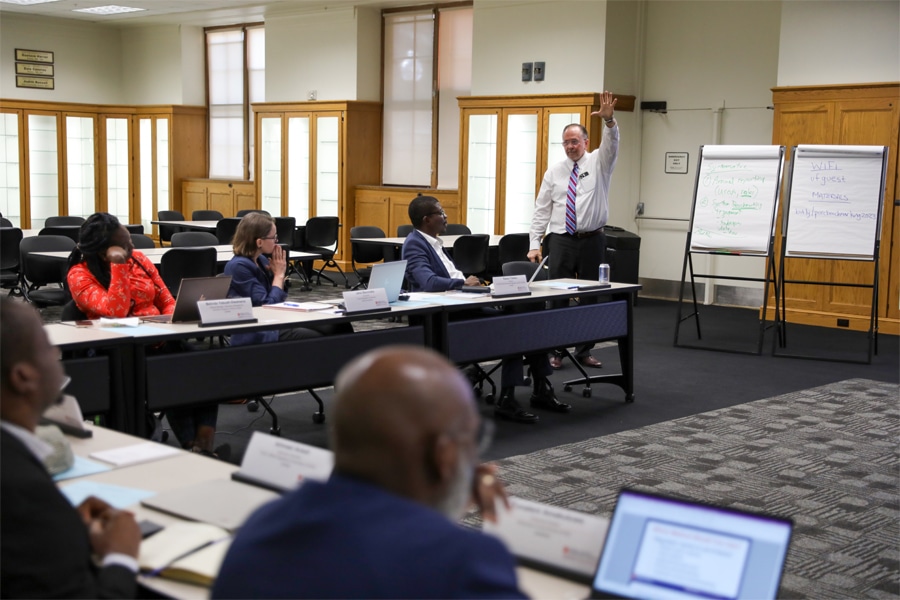
How can utilities be benchmarked for efficiency? Which types of comparisons are valid and which are invalid, possibly leading to significant errors? This advanced infrastructure course answers these questions and more, as participants (experienced utility professionals) analyze the benefits, best practices, and pitfalls of benchmarking utilities.
Upon completion, you will be able to:
- Understand why benchmarking is essential for improving the performance of infrastructure organizations
- Analyze the implications of partial, limited, or incorrect information
- Assess how information on trends in key performance indictors helps decision-makers
- Understand how model specification and data outliers affect performance comparisons
- Identify the strengths and limitations of alternative quantitative methodologies and how to communicate results
The course will be hosted at the University of Florida – Warrington College of Business. Participants will be housed at a hotel adjacent to campus and participants will be able to easily walk over to the training facility.
Course calendar
| Monday | Tuesday | Wednesday | Thursday |
|---|---|---|---|
| Session 1 Overview of Program Understanding the political economy of benchmarking; who supports benchmarking; who is threatened by comparisons; how can studies be misused; sources of conflict and sector performance: the role of evidence | Session 5 Alternative Methodologies for Measuring Performance Beyond key performance indicators; Metrics and productivity trends; statistical analysis (OLS and COLS); data envelopment analysis (DEA), and Stochastic Frontier Analysis (SFA). Strengths and Limitations of alternative methodologies. | Session 9 Review of Statistical Analyses Determining scale economies; economic vs. statistical significance; evaluating the robustness of results | Session 13 Performance Assessment and Performance Improvement Data acquisition and validation; best practice examples; pre-analysis (clustering, sensitivity analysis, KPIs); tables, scatter diagrams, figures; studies with data from participants. Implications for different stakeholders. Service quality and cost. Awards: top performers most improved. |
| Session 2 Case 1: Selecting Data Productivity, efficiency and effectiveness; identifying inputs and outputs, stocks and flows; prioritizing data needs; implications of partial, limited or incorrect information; conditioning and environmental variables. Legal authority for data collection. | Session 6 Case 4: Utilizing Available Software: Statistical Analysis With data from cases 1 and 3 participants will utilize the Analysis ToolPak in Microsoft Excel to estimate productions and cost functions; evaluating analyses; what are the strengths and limitations of statistical methods?; how sensitive are results to model specifications? | Session 10 Case 5: Utilizing Available Software–DEA Using data from cases 1 and 3, participants will develop performance indicators; results will be shared and evaluated; what are the strengths and limitations of statistical methods?; how sensitive are results to selection of inputs and outputs? | Session 14 Case 6: Communicating Results Should the analyst present scores or rankings?; who are the different audiences for performance studies?; each team will prepare a Press Release or Executive Summary for a different audience (sector ministry, regulator, top management, the press, consumer’s association) |
| Session 3 Case 2: Confidence in Performance Comparisons Additional inputs and outputs; additional years (trends); context and governance variables; introduction to robust comparisons. Moving from KPIs to Overall Performance Indicators. | Session 7 Case 4: Continued – Group Work Each participant will practice using Analysis ToolPak in Microsoft Excel to analyze the efficiency of utilities in the sample; results of different specifications will be used to strengthen abilities to interpret empirical results | Session 11 Case 5: Continued – Group Work Participants will utilize DEA software to compute performance scores for the sample utilities; specifications of cost and production relationships will be evaluated | Session 15 Action Plans Presentation of individual Action Plans; think strategically about your relationships; develop a system of accountability; give and receive critical feedback |
| Session 4 Case 3: Back to the Basics Data definitions; Total Factor Productivity (TFP); evaluating company information systems (sensors, data capture, data consistency, storage, analysis, decisions); checklist for conducting benchmarking studies | Session 8 Benchmarking Studies: Engaging Stakeholders Participants will develop stakeholder maps, identifying groups with high/low influences and high/low interest in improving sector performance. Opponents of change will be identified. | Session 12 Using Benchmarking Results Public awareness (transparency and public acceptance/legitimacy); internal incentives (efficiency); regulatory incentives (effectiveness); price reviews (x-factors); baselines, trends and targets | Session 16 Next Steps and Key Lessons Current capabilities; adequacy of data system; developing strategic plans for engaging allies, opposition, and other important players; next steps for your organization; prerequisites to successful benchmarking; planning the next study |
The $4,795 fee includes:
- Program tuition
- Reading and classroom material
- Hotel accommodations for five (5) nights (arrival Sunday, August 1 and checkout Friday, August 6)
- Monday – Thursday: breakfast, refreshment breaks, lunch
- One dinner
- Please note that participants are on their own for dinner each night, with the exception of one (1) social dinner. There are a number of dining options within safe walking distance of the hotel.
If you’re interested in attending both the Benchmarking Infrastructure Operations course and the Energy & Water Pricing course a discounted fee is offered.
Course fee for both courses is $9995 (savings of $595).
The fee includes:
- Program tuition
- Reading and classroom material for both courses
- Hotel Accommodations for twelve (12) nights (arrival Sunday, July 25 and checkout Friday, August 6)
- 1st week (Monday – Friday): breakfast, refreshment breaks, lunch
- 2nd week (Monday – Thursday): breakfast, refreshment breaks, lunch
- Two dinners
Practicing Leadership in a Political Environment
A one-day intensive training for leaders in utility policy. In this workshop you will examine the activities, behaviors, mindsets and skills of a successful leader.

Many people are called upon to provide leadership. Some succeed. Many fail. In this workshop you will examine the activities, behaviors, mindsets and skills of a successful leader.
As a participant, you will learn and practice the following:
- Identify and develop your own leadership profile. Learn to create leadership in others.
- Examine personal practices of successful leaders in developing vision, resolving conflicts and setting priorities. Create a strategy for managing the relationships that are critical to your success.
- Discover opportunities for growth in your organization and intervention methods that encourage collaboration and team cohesiveness. Learn how executive leaders create an organizational focus around the most important priorities.
- Analyze what is different about practicing leadership in a political environment.
- Develop a personal leadership action plan and an accountability system for addressing your most important challenges. Receive feedback to develop skills for managing yourself and others.
Upon completion of the workshop, you will develop and take home an implementation guide and action plan.
Practicing Leadership in a Political Environment Workshop agenda
- Breakfast
- Session 1
- Introductions and purpose of the workshop
- Building the organization
- Discover how to identify the key attributes of your organization.
- Learn how executive leaders create an organizational focus and a creative tension around the most important priorities.
- Build accountability in the organization.
- Break
- Session 2
- Effective leadership
- What does it mean to practice leadership?
- How do leaders display and use courage?
- How can leaders rally groups to a shared vision?
- What are the risks in leadership?
- Effective leadership
- Lunch
- Session 3
- Determining your leadership style
- Identify and build your personal leadership style.
- Analyze your personal leadership challenges.
- Create leadership in others.
- Determining your leadership style
- Break
- Session 4
- Developing a leadership plan of action
- Think strategically about your relationships.
- Develop a system of accountability.
- Give and receive critical feedback.
- Developing a leadership plan of action
- Closing remarks
Fee
- US $795 for the PURC International Training Program participants
- US $1,195 for all others
Fee includes tuition, reading material, lunch, morning and afternoon snacks and course material in English.
Workshop methodology
The workshop will use the field laboratory method of examining participants’ own leadership challenges. Most learning will take place in teams and will use personal cases and scenarios as teaching points. Instructors will present tool kit sessions followed by intensive personal application exercises and team presentations.

The course was a highly valuable experience for me. The sessions were well structured and the speakers engaging and knowledgeable. Ted, Raj and Araceli delivered sessions that blended theory with practical applications and tools that I can apply immediately in my work. The diverse group of participants enriched the discussions, making the learning impactful. I highly recommend this course to anyone looking to strengthen their skills in pricing and regulation.
Achilana Mtingele
Energy & Water Pricing Course
Senior Economist – Tanzania

Today’s discussions reinforced the idea that leadership is a journey, not a destination. The lessons of the PURC team and the engagements with colleagues from different countries, and industries, and with different skillsets and experiences have encouraged me to think broader and with more depth. I enjoyed the rich dialogue with the team and learned not just about new areas but, more importantly, I learned more about my leadership style, strength and weaknesses and how to utilize them effectively.
Christa Leith
PURC’s Leadership Workshop
Senior Manager, Regulatory and Policy Affairs – Trinidad & Tobago

The program provided an excellent opportunity to deepen my understanding of utility regulation. The combination of high-quality lectures, practical case studies, and discussions with professionals from different countries enriched the learning experience and offered valuable insights that will be applied in my work at Brazil’s regulatory agency.
Thompson Sobreira
PURC International Training Program on Utility Regulation and Strategy
Energy Utilities Regulation Specialist – Brazil
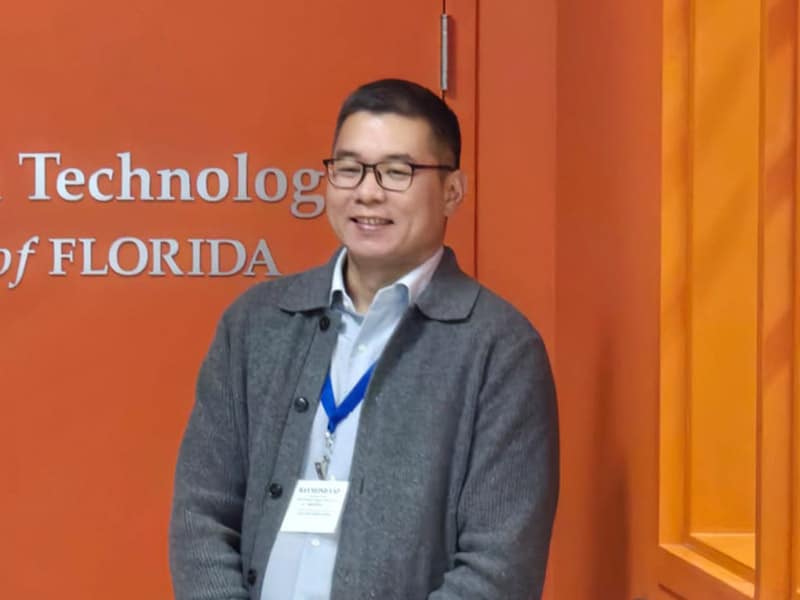
Our company thinks very highly of the PURC International Training Program on Utility Regulation and Strategy. The course provides excellent speakers, updates coverage of key issues/regulatory topics, valuable interactions with fellow participants – all diverse applications in our work in the regulatory industry.
Raymond Yap
PURC International Training Program on Utility Regulation and Strategy
Lead Legal Counsel – Philippines
Comprehensive Regulatory Impact Analysis
Are your utility regulations achieving desired results? Do you have the proper tools to analyze their impacts? Do you want your studies to be the gold standard by which all others are measured? Do you want your studies to be used and not shelved? The on-demand online course for utility regulators, policy makers, and infrastructure professionals has been redesigned for self-paced, individual participation. Once payment is received, you will have six months to complete the course work.
Enrollment temporarily closed. We’re currently updating our online course to bring you an even better learning experience. Enrollment is paused during this time. Please check back Fall 2026.

Avoid the pitfalls that stifle utility regulatory decisions and gain support for difficult issues. Learn how to effectively and rigorously analyze and communicate the impacts of regulations, wherever you are. With our online course, Comprehensive Regulatory Impact Analysis, you will learn from experts and exchange experiences and best practices with peers through the latest in Internet technology.
The course Comprehensive Regulatory Impact Analysis provides tools and approaches for regulatory impact analysis, a systematic appraisal of the potential impacts of a regulatory decision to assess whether the decision is likely to achieve the desired objectives and at what cost. Through case studies, exercises, and lectures, course participants learn how to identify key questions, identify stakeholders and engage them in the analysis, use appropriate analytical techniques, and communicate their findings.
Outcomes
At the conclusion of the course, you will be able to structure a RIA process. In addition, the course will take you beyond process to higher levels of RIA substance and communication. You will be able to:
- Project the impacts of alternative regulatory policies on different customer classes, including alternative rate designs, conservation programs, and service quality improvements
- Incorporate advanced elements into RIAs, including uncertainty (and the precautionary principle), option values (for the timing and sequencing of projects), and referent analysis (identifying the impacts on different stakeholder groups and on the environment)
- Analyze potential impacts on infrastructure performance based on simulations
- Develop strategies and systems for tracking the results of regulatory decisions
- Communicate RIA to decision makers and stakeholders by categorizing benefits, costs, and associated risks in clear and comprehensible language
Course structure
This is a self-paced course and will be delivered entirely online through the University of Florida’s course management system, Canvas. In Canvas, you will access video lectures, course materials, course case study and additional resources. Activities include:
- Watching recorded lectures
- Completing six written assignments
- Meeting with the PURC faculty for three office sessions (approximately 30 minutes each) via Zoom to address your specific case and any questions you have regarding the content.
Access to Canvas will be provided once your payment is received.
Completion of assignments within six months of registration is required to receive the certificate of completion
Course requirements
- Internet connection (DSL, LAN, or cable connection desirable)
- Chrome is the recommended web browser for Canvas. Internet Explorer and Safari should not be used to access Canvas.
- Access to course management system, Canvas.
- Completion of six assignments.
- Engagement with course faculty in three office sessions hosted via Zoom.
- All course assignments must be completed within six months of registration to receive certificate of course completion.
Course fee
Regular course fee of $1,495 includes:
- Program tuition
- Reading and online classroom material
- Three office sessions (approximately 30 minutes each) via Zoom with PURC faculty

PURC Annual Conference
For more than 50 years, the Public Utility Research Conference has served as a neutral forum for key leaders in industry and academia, primarily from Florida and the Southeast.
PURC Leadership Services
PURC Leadership Services help you transform your agency or company by identifying what is truly holding it back from realizing its goals and by providing the tools to solve your challenges. We equip professionals at every level of the organization by leveraging their talents, creativity and energy to take charge of their own future. PURC’s interactive, case-oriented approach is designed for our clients to become world-class leaders.

Leadership services
- Practicing Leadership in a Political Environment – an intensive, one-day workshop
- Next Generation Leaders: CEOs Dialogue – a virtual development program for working professionals
- Customized leadership training – tailored program and tools to meet your specific needs. We work with individuals and groups at every level of the organization to affect the necessary change and move forward in your challenges. Clients reach out when they:
- Want to develop a robust leadership culture
- Find themselves failing to reach aspirations
- Are preparing for a significant change
- Want individuals or groups to take ownership of the organization’s success

One-on-one coaching
Coaching is designed to help you move from where you are to where you want to be. Whether you’re struggling with your own individual challenges, need to create a holding environment for change in your team, or have to mobilize others in difficult situations, our practice will coach you through the process to achieve your goals.
Together we will explore your issues, discover what may hold you back, and study the best possible interventions for your context. Whether you are at the top of the organization or practice leadership at any level, our coaching services are for you.
Transformation Package
The package resolves problems by allowing an organization to mix and match our methods, courses, customized leadership development, and receive advisory services that develop a confident culture that continuously learns and expands its leadership capabilities.
- Three seats each in three courses of your choosing
- Thirty hours of leadership training and coaching fo 10 individuals
- Thirty hours of advisory assistance on regulatory techniques, strategy, and leadership
Choose different members of your organization for each aspect, but we recommend that a core of five people participate in all three aspects.
The price for our Transformation Package is $180,000.
Customized training
Our tailored utility infrastructure training programs are individually designed to help you identify the best solutions to the pressing issues you face today. By working with you to design the program, we can deliver the most relevant curriculum, expand upon your organization’s existing competencies, and develop tailored strategies using the right tools for the job.
- Leadership, strategic planning, independence, transparency, stakeholder involvement, negotiating skills, benchmarking, economic and financial analysis
- Expanding understanding of the pricing of infrastructure services.
- Developing skills for price reviews and rate cases.
- Enhancing knowledge of market structure and design.
- Building capacity to address environmental considerations.
- Knowledge of technology issues, stakeholder perspectives and relationships.
- Improving policy-making and implementation.
Programs teach the principles and practices that support effective utility policy and regulation. Instructional approaches include case studies, lectures, client problem-solving, simulations, video, e-learning, and site visits. Training is rigorous, but practical.

- Fundamentals, purpose and role of utility regulation
- Regulating utility markets, finances, prices, and services
- Regulatory issues and cost of service
- Industry structure, markets and competition
- Electric fuel
- Electric and energy issues
- Advanced course on regulatory economics and process
- Competition in convergence markets: open access and financial analysis
- Competitive analysis in telecoms: current and future markets
- Infrastructure sharing for broadcasting
- Methods in radio spectrum planning and management
- Telecom policy and regulation for next generation networks
- Executive leadership, strategic planning and organizational development
- Leadership and management skills for state utility regulators

PURC has developed customized training programs for ARSESP (Agencia Reguladora de Saneamento e Energia de estado de Sao Paulo), the National Broadcasting and Telecommunications Commission of Thailand, Aqualectra, the Florida Public Service Commission, the Nigerian Power Holding Company, and the Bermuda Department of Energy, to name a few.
Our experts will be in touch with you shortly to further discuss your needs.

PURC courses, workshops and events
February 17